
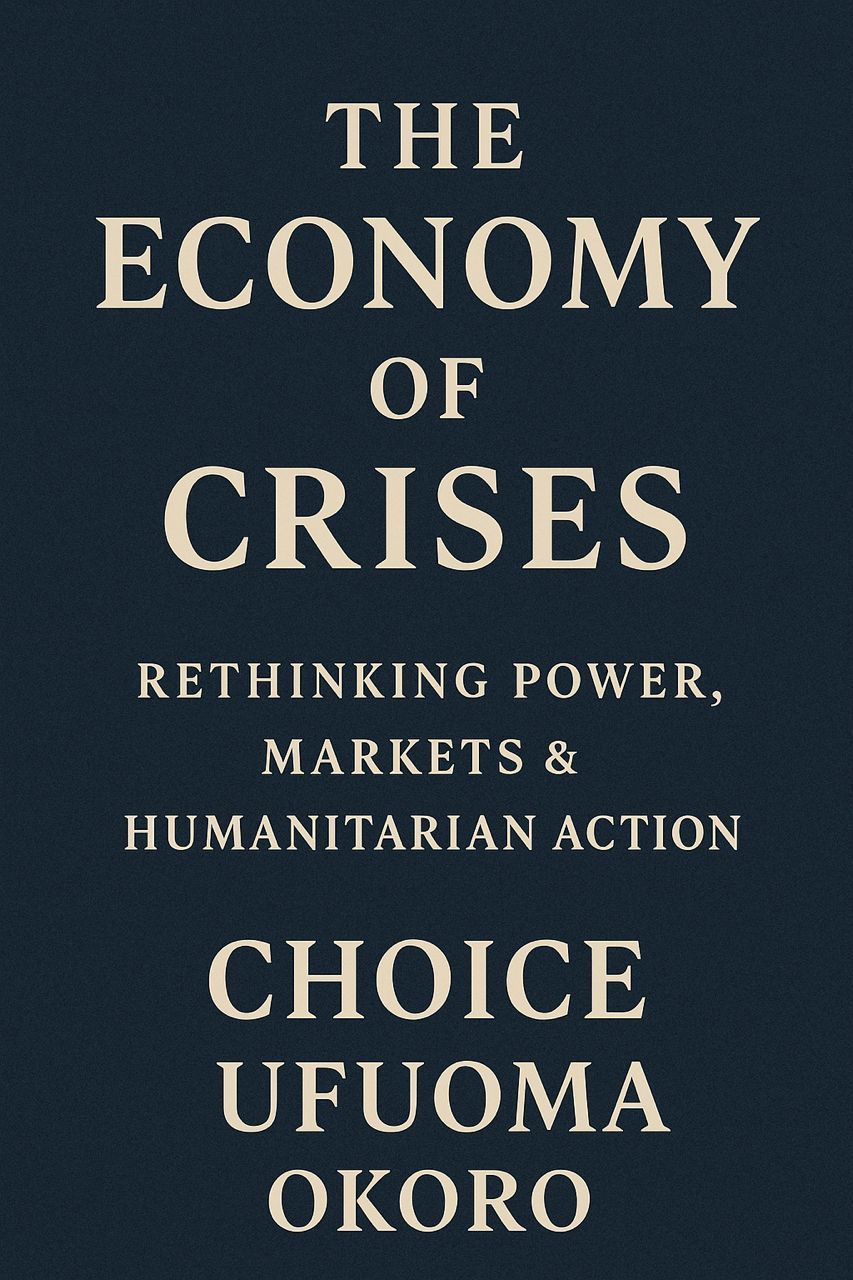


The Economy of Crises
₦8,000.00
In The Economy of Crisis, Choice Ufuoma Okoro invites readers to reconsider the role of humanitarian crises in our interconnected world. This book advocates for a fundamental shift towards national ownership and strategies that prioritize recovery over permanence.
In The Economy of Crisis, Choice Ufuoma Okoro invites readers to reconsider the role of humanitarian crises in our interconnected world. Drawing on fifteen years of firsthand experience within the United Nations humanitarian framework, Okoro reveals a striking paradigm: crises are not merely failures to be remedied; they have evolved into a burgeoning global economy.
As conflict zones, displacement areas, and disaster aftermaths transform into long-term infrastructures, this book illuminates how funding channels, institutional growth, and political motivations create an ever-present cycle of crisis management that often overshadows the need for lasting solutions.
By introducing the concept of the “crisis economy,” Okoro encourages critical reflection on the unintentional rewards that perpetuate humanitarian responses rather than resolutions. With sharp insights into funding architectures, the political economy of emergency financing, and the balance between international intervention and national capacity, Okoro challenges us to confront uncomfortable questions about accountability and incentive structures within this complex landscape.
This book is not an indictment of humanitarian action; instead, it serves as a clarion call for reform. Okoro advocates for a fundamental shift towards national ownership and strategies that prioritize recovery over permanence. Aimed at policymakers, development experts, and scholars alike, The Economy of Crisis reframes a pressing question: who truly benefits when crises are allowed to endure?